
BLACKCROC PROTECTS SERIES
Rugpull and Pump&Dump

Welcome to the inaugural chapter of "BLACKCROC PROTECTS SERIES," a comprehensive initiative we've launched to safeguard our community from the lurking dangers of the crypto world. In this series, we'll delve deep into the various scams that plague the crypto space, dissect their workings, and equip you with the knowledge to spot, understand, and steer clear of them. Stay tuned, 'cause we're just getting started!
In the fast-paced world of cryptocurrency, opportunities for significant gains can sometimes carry risks of equally significant losses. Among the most notorious of these risks are 'rug pulls' and 'pump and dump' schemes. These deceptive practices not only undermine the integrity of the crypto market but also pose serious financial threats to unwary investors. In this blog post, we'll explore what these schemes are, how to recognize their warning signs, and most importantly, how to protect yourself from falling victim to these malicious maneuvers.
Rug Pull
A rug pull in cryptocurrency refers to a fraudulent scheme where developers of a project abruptly withdraw all invested funds from the project, leaving investors with worthless tokens. This type of scam is prevalent within the decentralized finance (DeFi) ecosystem, particularly on decentralized exchanges (DEXs). Developers often create a token, hype it up to attract investors, and once a substantial amount of money is invested, they drain the liquidity from the DEX, causing the token's value to plummet to zero. Draining the liquidity pool means that the developers remove all the funds that investors have traded for the token, essentially leaving the token without any backing value and making it impossible for investors to sell it at a fair price.
Semantically, the term "rug pull" comes from the phrase "pulling the rug out from under someone," which implies a sudden and unexpected removal of support, leaving the individual in a precarious or detrimental situation.
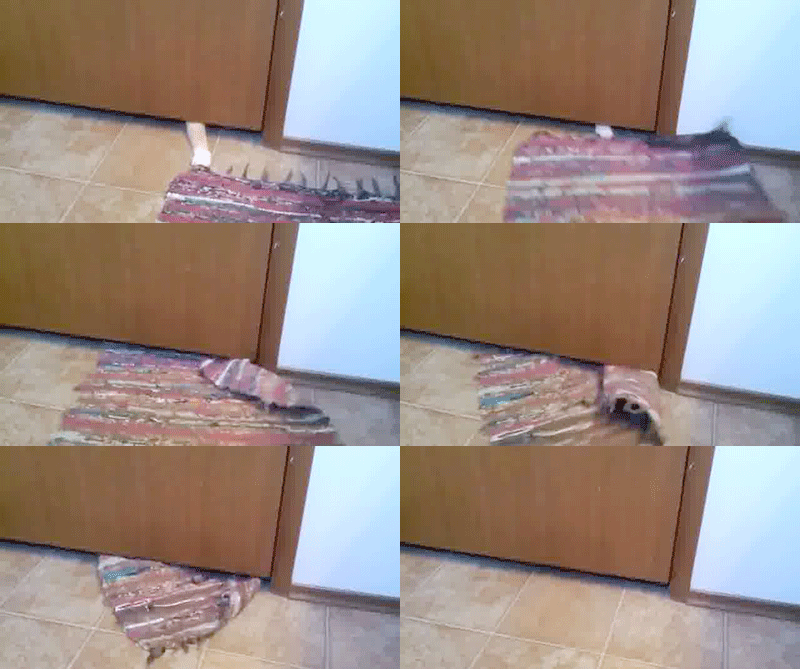
In the following section, let's explore one famous example of a rug pull.
The Squid Game Token Rug Pull
The Squid Game Token rug pull is a textbook example of a cryptocurrency scam capitalizing on the popularity of cultural phenomena—in this case, the Netflix series "Squid Game." This scam demonstrates how hype and the lack of due diligence can lead to significant financial losses for investors.
Origins and Surge
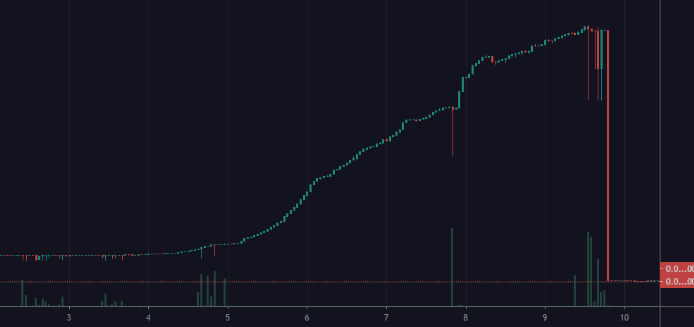
The Squid Game Token emerged as a seemingly promising cryptocurrency, marketed as a play-to-earn game linked to the wildly popular TV series, though it was not officially affiliated. Its whitepaper, now removed along with the project's website, pitched a reward system that expanded as more participants bought in, reminiscent of a Ponzi scheme. Within days of its launch, the price of the token skyrocketed from 72 cents to hundreds of dollars, propelled by social media and speculative trading.
The Rug Pull Event
Despite early warnings from observant members of the crypto community on platforms like BscScan, where some flagged it as too good to be true, the frenzy continued. The token's value increased rapidly, peaking at $2,861.80 per token. However, the design of the Squid Game Token included a critical trap: holders discovered they couldn’t sell their tokens without purchasing "marbles" through a specific game controlled by the project's developers. It turned out those marbles were just another way to squeeze out more money from investors who were trying to get their money.
On November 1, just days after its peak, the developers withdrew $3.36 million from the liquidity pool, causing the token's value to collapse to nearly zero within minutes. This action left investors with worthless tokens, as the developers had orchestrated a classic rug pull by draining all funds from the project's liquidity pool. Check here the reaction of streamer who caught pulling the rug live.
Pump & Dump
A "pump and dump" (P&D) scheme is a type of market manipulation where participants artificially inflate (pump) the price of a cryptocurrency through misleading or outright false promotions and exaggerated claims about the asset. Once the price has been pumped and enough unsuspecting investors have bought in, the perpetrators then sell (dump) their holdings at the inflated price. This sudden selling leads to a sharp price drop, leaving the new investors with significant losses as the asset's value crashes. The big issue is that it can happen without any direct involvement from the project's developers or team. Let’s explained how.
Vulnerability of Low Market Cap Projects to Pump and Dump Schemes
Low market capitalization (low mcap) projects in the cryptocurrency world are particularly susceptible to pump and dump schemes. Here's how these projects can become targets and the mechanics behind such schemes:
1. Attractiveness of Low Mcap Tokens: Low mcap projects are attractive targets for pump and dump manipulators due to their relatively low volume and market cap. This means that even a small amount of capital can significantly influence the price of the token, making it easier to manipulate.
2. Building Volume and Hype: Manipulators may start by accumulating large amounts of a low mcap token quietly. Once they hold a significant portion, they begin creating hype around the token through social media, forums, and sometimes paid promotions or endorsements. The goal is to attract attention and investment from the broader crypto community.
3. Price Inflation Through Coordinated Buying: As more investors start buying the token, drawn by the hype and the rising price, the volume increases, and so does the price. This phase is critical as it builds the perceived value and legitimacy of the token, encouraging more people to invest in hopes of quick gains.
4. The Dump: Once the price reaches a predefined point, the initial manipulators start selling their holdings. Given their substantial amount of the token, this selling puts significant downward pressure on the price. Since the volume and liquidity of low mcap projects are generally low, the market cannot absorb the sudden sell-off without a drastic drop in prices.
5. Latecomers Face the Consequences: Investors who joined during the upward trend, influenced by the hype and fear of missing out (FOMO), are left holding the token as its value plummets. Often, these latecomers are unable to sell their holdings without incurring substantial losses.
All mentioned above means that not only meme coins are susceptible to pump & dumps, but also any other low mcap project on which whales (holders of mucho tokens) put their hands on.
Examples of Pump & Dump
P&D meme coin
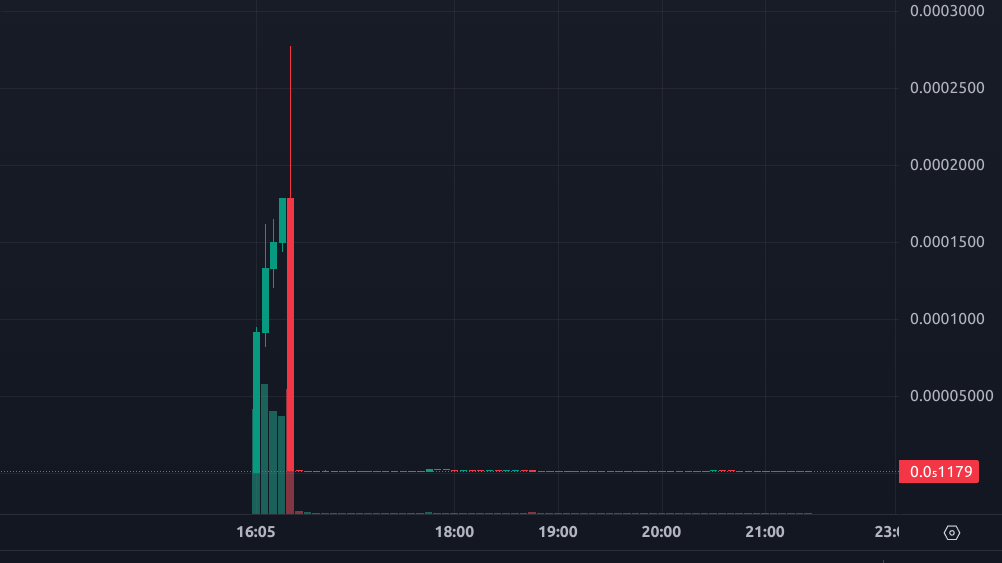
To find one it is quite easy, go on Dexscreener and choose any obvious memecoin which appeared within last few days/hours. Chances are quite high it will be P&D or even a rugpull (difference between the two will be explained in soon). At the time of writing this article, we opened dexscreener and chose random “interesting” meme coin. In this case it was $BUG. Within an hour, it had already been dumped, going from a value of ~$150k down to ~$1.5k. Check the graph of the BUG/SOL pair on Dexscreener:
But it can happen to basically any low mcap coin
Now let’s provide some example of non-meme coin P&D. Oddz crypto project could be completely legit (we don’t know and it is not important here), but what made it victim of P&D scheme is it’s low mcap and volume. Check following graph of ODDZ/USDT pair on Kucoin:
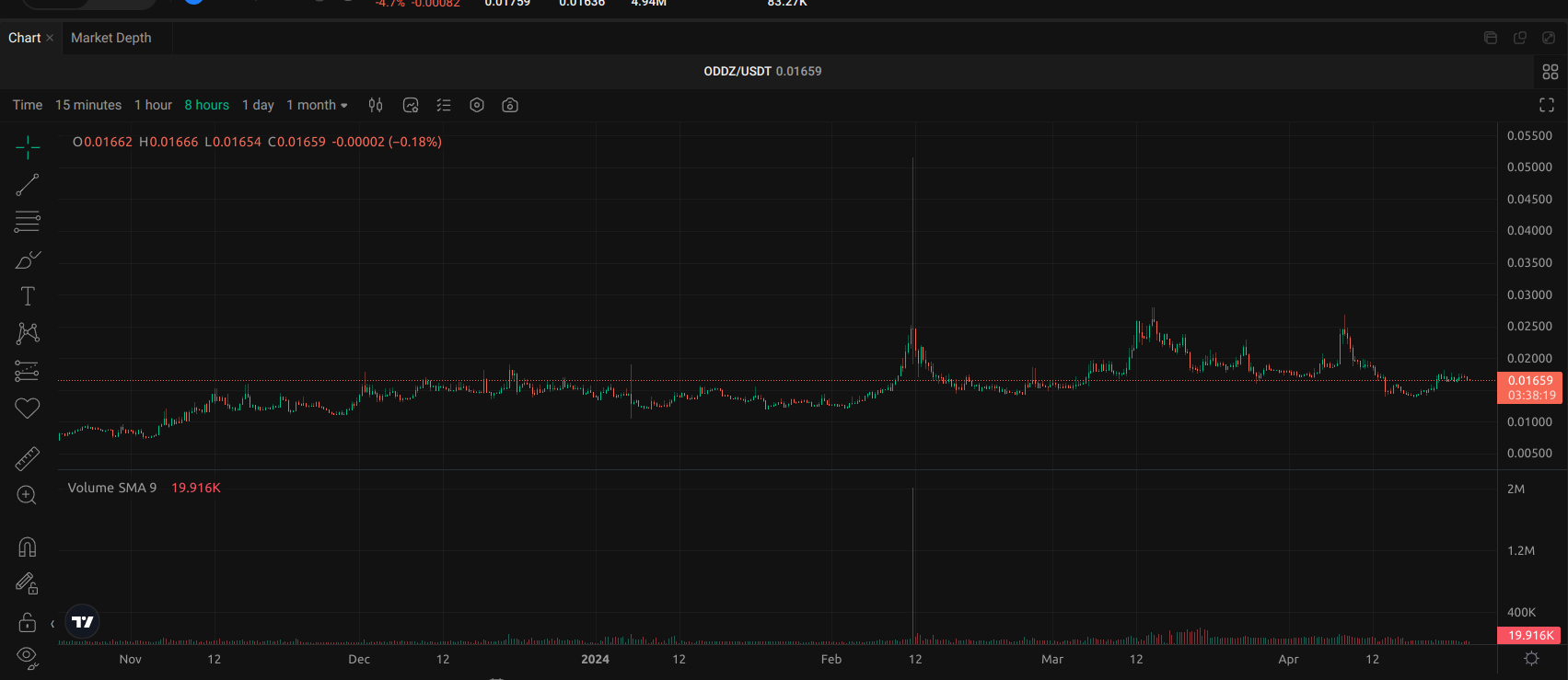
It’s price went fast x3 and then suddenly dropped again. To confirm this was indeed P&D, we’re providing the screenshot from P&D channel on Telegram:
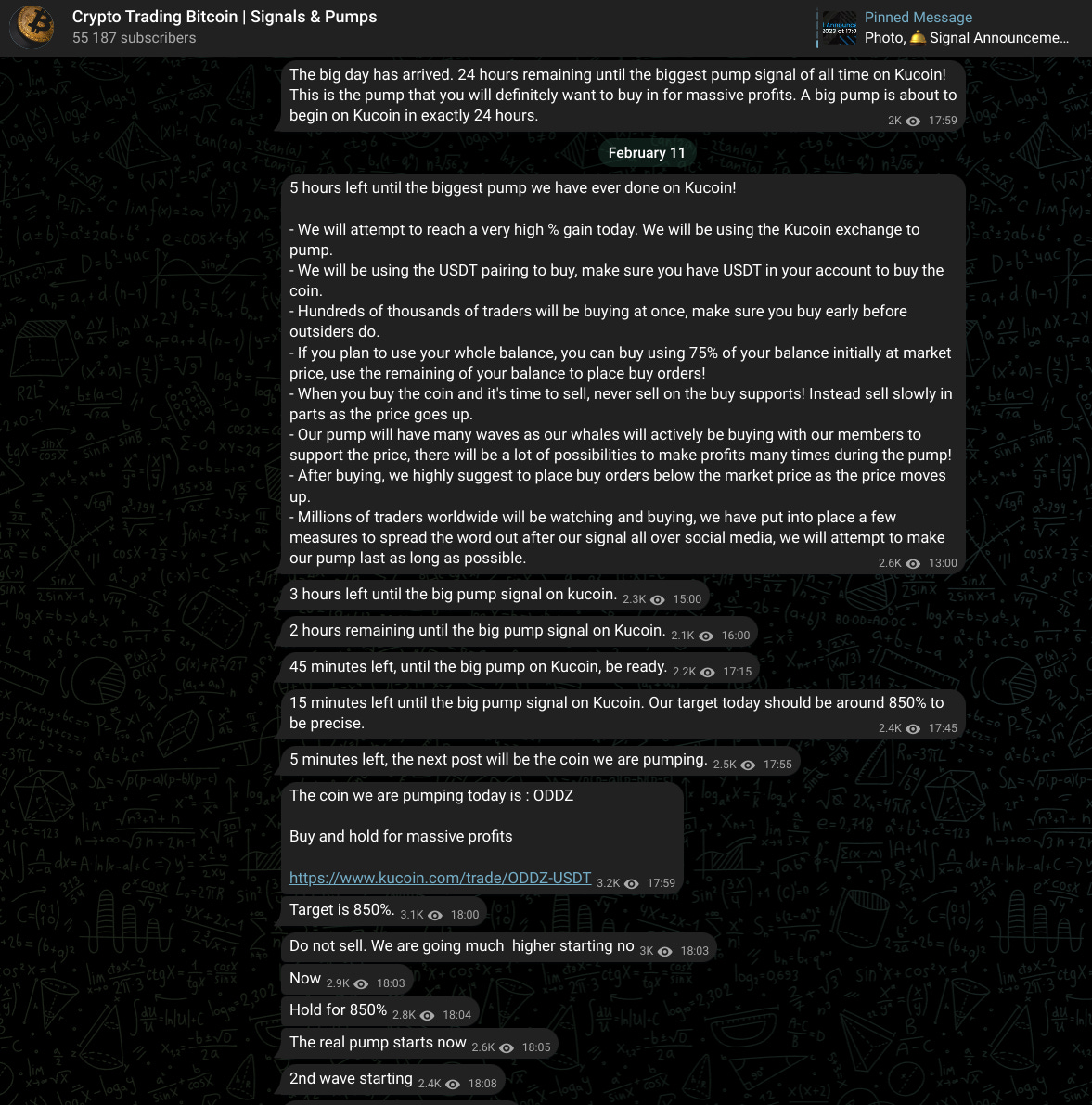
As you can see on the screenshot, subscribers were guided to do P&D on this specific coin using this specific exchange.
Rug Pull vs Pump & Dump
Following table is overview of main aspects of both phenomena where you can see how they differ.
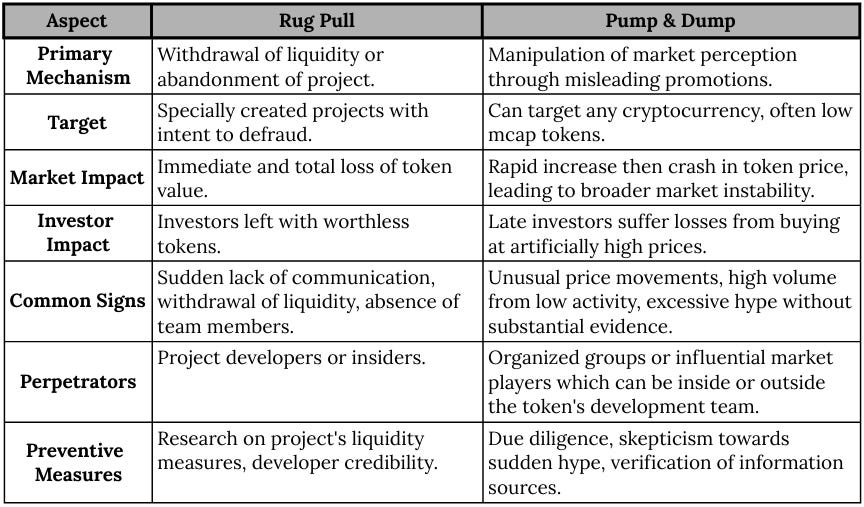
When observing graph of $BUG token which we mentioned above, the question might arise: “How can you be sure this is P&D and not Rug Pull?”. Well there is a website where you can check the main features of a token (and some other neat risk factors). On provided link you can see following key info: 100% of LP is burned, it is not mintable and ownership is renounced.
When 100% of the Liquidity Pool (LP) tokens are burned, it means all tokens that could claim liquidity from the pool have been permanently destroyed. This makes the LP immutable since no one, not even the creators, can access or remove the pooled funds. Additionally, when a token is not mintable, it indicates that no new tokens can be created, preserving the total supply as fixed. Ownership being renounced means that the developers have given up their administrative privileges or control over the contract, enhancing trust and security by preventing any future changes to the contract’s rules.
But, as you can see, that doesn’t mean you are safe. On the same website you can see (at the time of writing this article) one major red flag - Single holder ownership: 81%. Which means even if your tokens are safe and nobody can take them, their value still is not. If that one holder decides to sell all the tokens they own, value will go down significantly.
What About BlackCroc?
On BlackCroc official website you can see following:
100% Circulating Supply
Liquidity Pool Burned
No Presale
0% Taxes
Contract Renounced
2 more points are left unexplained. No Presale means tokens were not sold in an exclusive presale before public trading. Presales can often concentrate token ownership, and skipping this lead to a more equitable distribution among the general public. 0% Taxes means that there are no transaction fees charged by the token contract itself. This makes trading more appealing as it reduces costs for buyers and sellers.
How can we be sure mentioned points are true and BlackCroc is fairly launched? Because it was created on pump.fun.
Liquidity Management on Pump.Fun
pump.fun introduced an innovative approach to liquidity management for token creators. The platform utilizes a bonding curve mechanism that ensures liquidity is handled efficiently and securely, especially beneficial for developers and investors alike.
Bonding Curve Mechanism: on pump.fun platform, tokens are initially launched using a bonding curve model. This model automatically adjusts the price of the token based on its supply — as more tokens are bought, the price incrementally increases. This continues until the market cap of the token reaches $70,000.
Automatic Liquidity Switch to Raydium: Once the $70,000 market cap threshold is met, pump.fun automatically transitions the liquidity management to Raydium, a popular automated market maker (AMM). At this point, a significant action takes place — tokens are burned. Burning tokens reduces the total supply, inherently increasing the rarity and potential value of the remaining tokens. This process eliminates the need for developers to seed initial liquidity manually, which is a common requirement in other DeFi platforms.
Dynamic Liquidity and Investor Involvement: As investors purchase the token, their payments (in this case in SOL) are added to the liquidity pool, increasing the total liquidity available. This mechanism ensures that there is always sufficient liquidity to facilitate trades, which stabilizes the token's market and encourages further investment.
This setup on Pump.Fun not only facilitates easier entry for token creators by automating part of the liquidity management process but also enhances security and trust by minimizing the potential for rug pulls through the burning of tokens at a critical market cap milestone.
Then explain that graph!
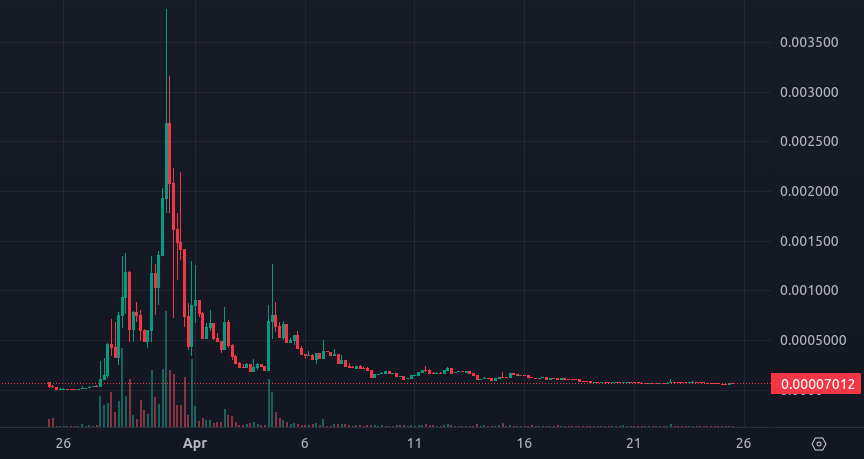
Yes, this graph shows a classic P&D pattern where the price of a project's token sharply increases before experiencing a significant decline, which suggests that some investors may have pushed the price up only to sell off their holdings for a profit once a certain market cap was reached. This is not something developer or other members of the project can stop. It can always happen some whales come and do P&D.
As active members of this project, we are actively taking steps to cultivate a robust, trust-filled ecosystem:
Transparency: We are committed to maintaining open and transparent communication. By keeping our community informed about our progress and the challenges we face, we build a foundation of trust. Every step is first communicated to community before moving forward.
Community Engagement: We actively engage with our community through AMAs, regular updates, and interactive sessions to keep the interest and support of our investors.
Content Creation: We’re in the business of crafting entertainment that resonates. Our memes are unrivaled in the crypto space, often going viral for their humor and sharp wit. This isn't just content; it's a way to engage and connect with our community on another level. This article is a testament to our creative efforts, showcasing how we’re broadening our reach and capturing the attention of investors who not only see the potential for quick laughs but also recognize the deeper value of our project.
Collaborations and Partnerships: We're constantly looking for strategic collaborations and partnerships to not only add credibility but also to explore new avenues for growth of our project.
Active Ecosystem: By showcasing an active ecosystem we underline the inherent value of our project, distinguishing ourselves from mere speculative trading.
Innovation: We are continuously innovating and introducing new features and services, creating intrinsic value to sustain our project in the long term.
We acknowledge that meme coins are a high-risk venture. Yet, it is our unity and collective effort that form the bedrock of our project's resilience. We are in this together, weathering market storms and celebrating successes as one community. Stay safe out there!
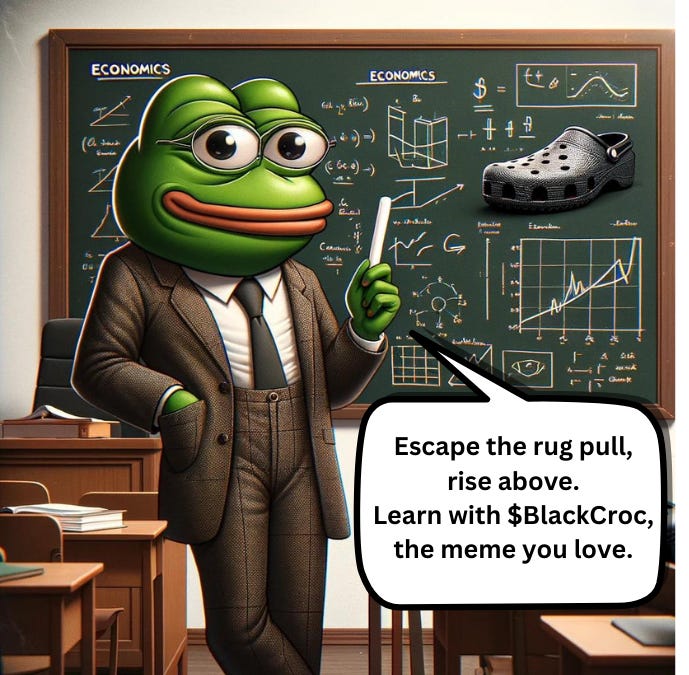
If you're keen to dive deeper into the world of BlackCroc, we've got all the cool spots lined up for you. Swing by our socials and follow our tracks for the latest scoop, insider talks, and all the extras you won't want to miss. You can find all the links right here. Catch you on the flip side!
Sources:
https://crypto.com/university/what-is-a-rug-pull
https://coinmarketcap.com/academy/glossary/rug-pull
https://www.wired.com/story/squid-game-coin-crypto-scam/
https://medium.com/@danny_67840/smart-investors-guide-how-to-avoid-rug-pulls-in-crypto-13744e862ed3
https://vpnoverview.com/privacy/finance/crypto-pump-and-dump/
https://coin360.com/glossary/pump-and-dump
https://finbold.com/guide/pump-and-dump-scheme-definition/
Well written!
This is the blackcroc to end all rugpulls